From Three Banks to One
Omni-channel Experience and Service Design to transition ANZ and Suncorp Bank customers to ANZ Plus platform.
Project status:
Phase 1: (ANZ → ANZ Plus) built;
Phase 2: In-progress
Platforms
iOS, Android, Web
ANZ acquired Suncorp Bank in 2024. The plan is to move all customers to the bank's new ANZ Plus platform.
The program had two phases - first to migrate 3.2 million ANZ customers to ANZ Plus, then shifted to moving 1.2 million Suncorp Bank customers to ANZ.
The common design challenge across two phases is: A trusted, supportive experience so that customers take action in time and safely transition their banking.
At a glance
4.4m
ANZ and Suncorp Bank customers to be migrated20+
Project teams across ANZ, ANZ Plus and Suncorp BankPHASE 1ANZ to ANZ Plus
Role: Product Design Lead
Team: Service Design Lead, Design Researcher, Initiative Lead, business analysts
Collaborators: Cross-functional peers and designers from Personalisation, App and web banking, Identity, Accessibility
As The Product Design Lead in Phase 1, I led the foundational omnichannel migration experience across 5 channels, the brand transition strategy, and influenced authentication decisions impacting 160,000 customers.
Brand strategy for trusted communications to 3.2m ANZ Customers
In Phase 1, customers would receive communications about their move. They'd have a period to download and set up the ANZ Plus app. If they didn't act by move day, they'd be locked out.
We want to make sure customers trust the communication the bank sends them to take action in time. Customers see ANZ and ANZ Plus as one bank, but user research showed they can identify the difference in visual language.
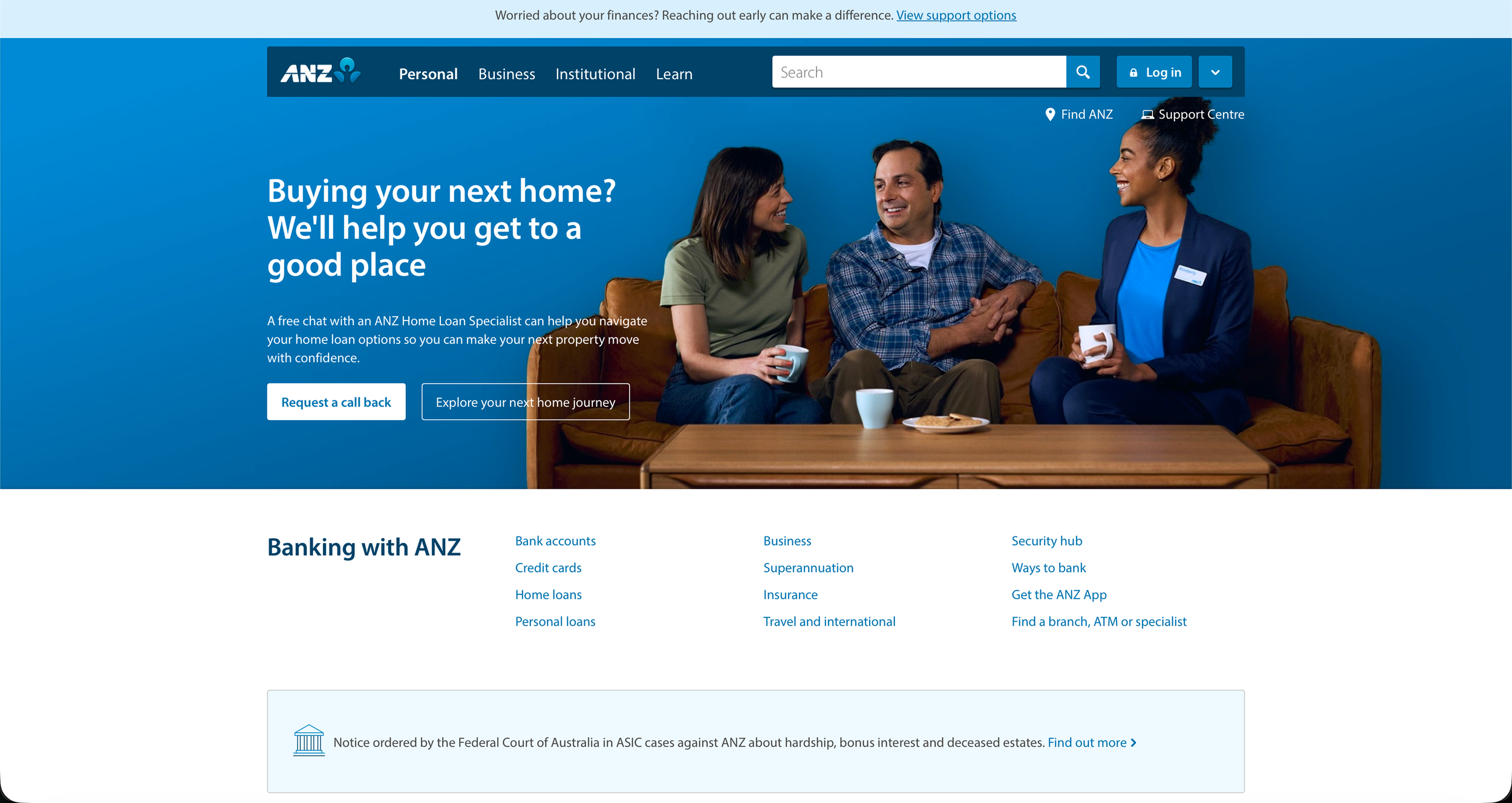
Customers need to recognise and trust the brand asking them to take action. A customer who dismisses a genuine email as phishing or marketing misses critical information and could end up locked out, increasing contact centre traffic and eroding trust.
The Strategy
The program comms team was newly formed. From previous experience I knew brand and marketing review would be required, so I developed the strategy early to engage both teams and prevent late rework impacting timelines.
We’re migrating customers who are more familiar with the ANZ brand. They trust what's familiar, especially outside of authenticated experiences. My strategy built on three principles:
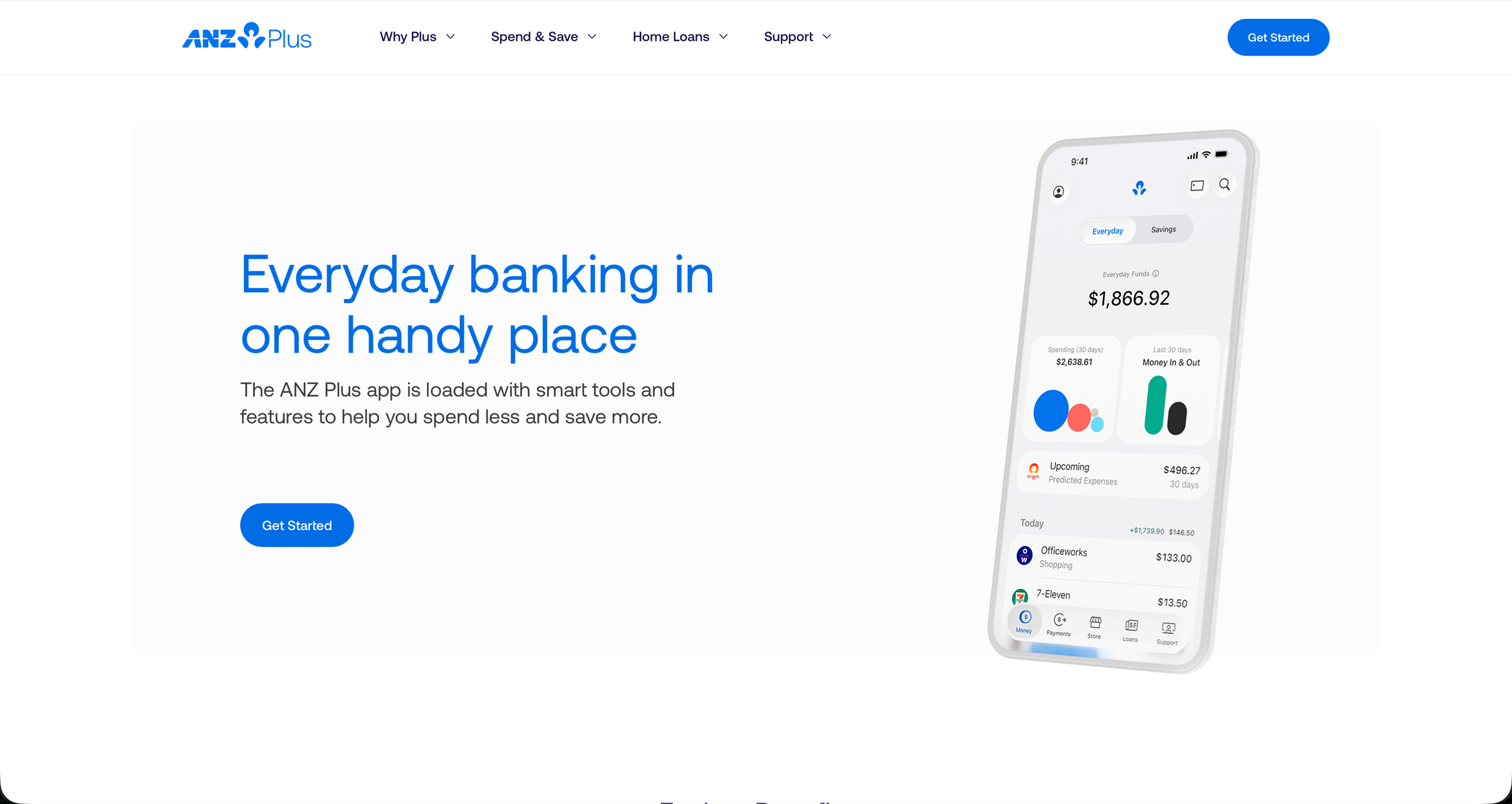
Brand strategy - principles
Brand familiarity - Leverage existing trust with ANZ to legitimise communications,
Sense of security - familiar branding signals the message is genuine and safe to act on.
Promote value in a trusted space — once customers feel safe, introduce ANZ Plus benefits
Strategy translated into comms branding
This approach was endorsed by brand, comms, and marketing teams. Branding in all comms are subsequently applied based on the strategic and validated through user testing. Three rounds of end-to-end testing produced strong results. SUPR-Q scores averaged above 4, with customers reporting the communications felt trustworthy and safe to act on, which validates the brand strategy.
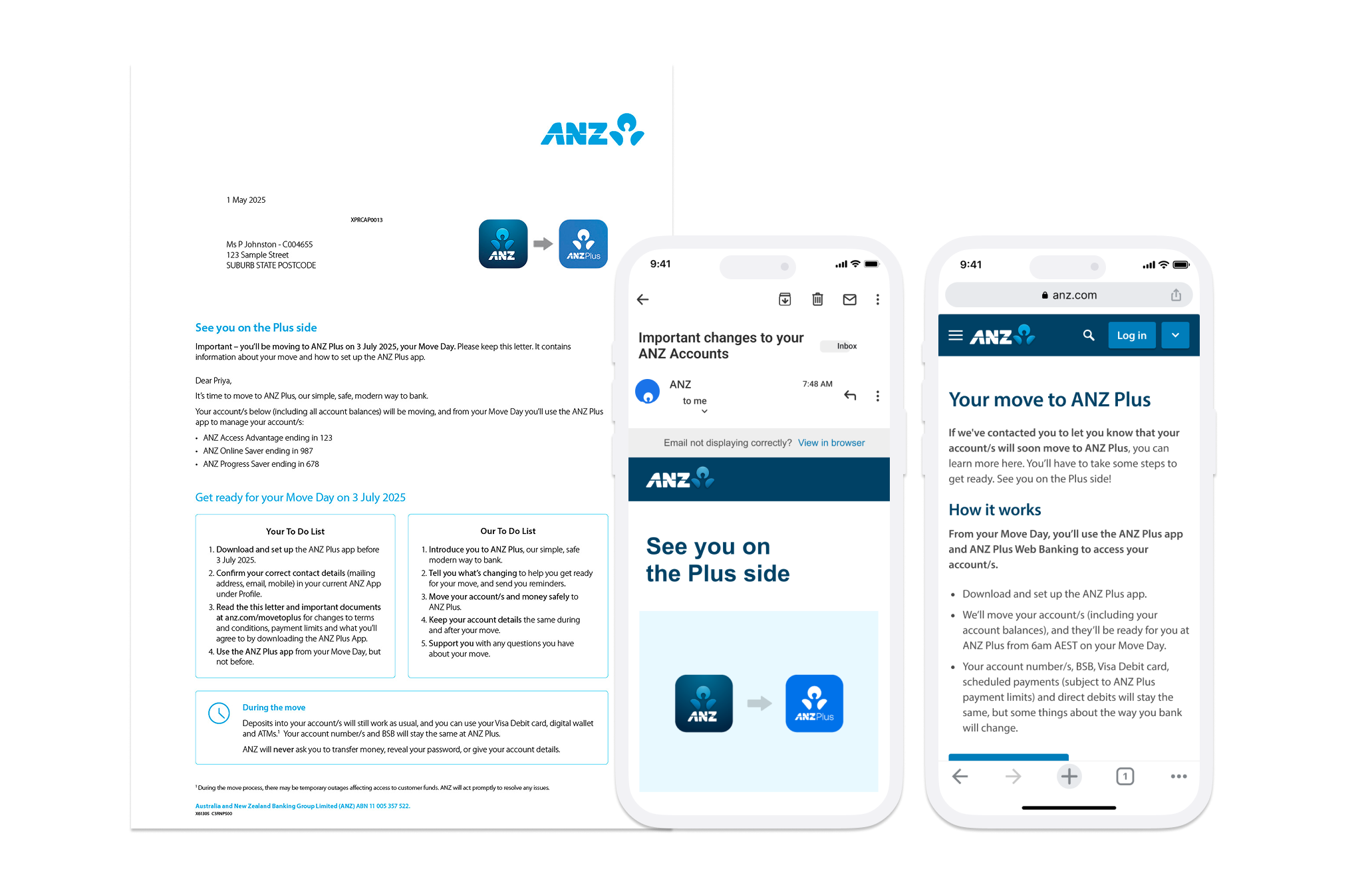
Unauthenticated channels In “Classic” ANZ branding (emails, website) where customers need to trust the source.
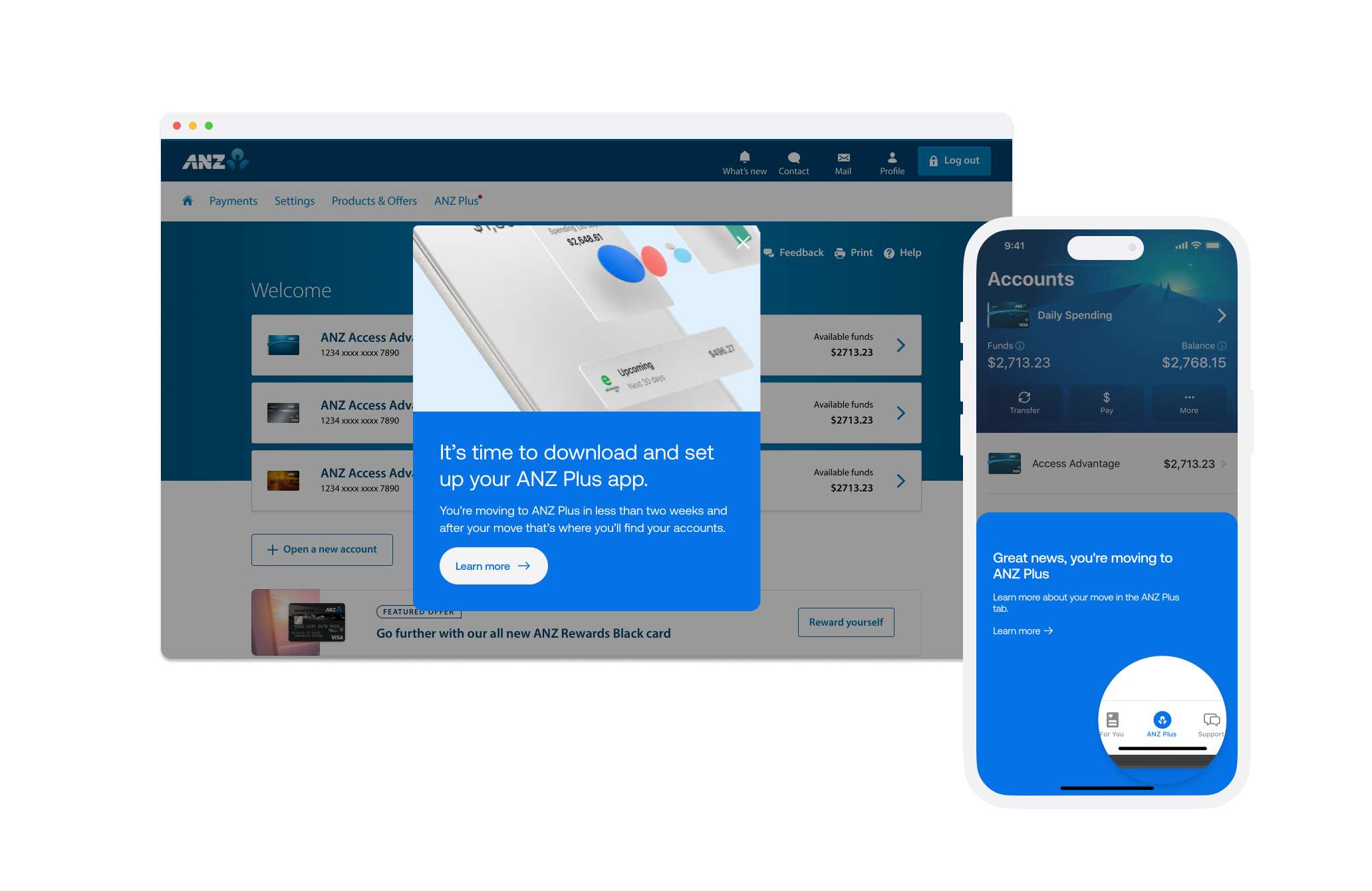
Authenticated channels: Once trust is established, promote Plus benefits in a contained space.
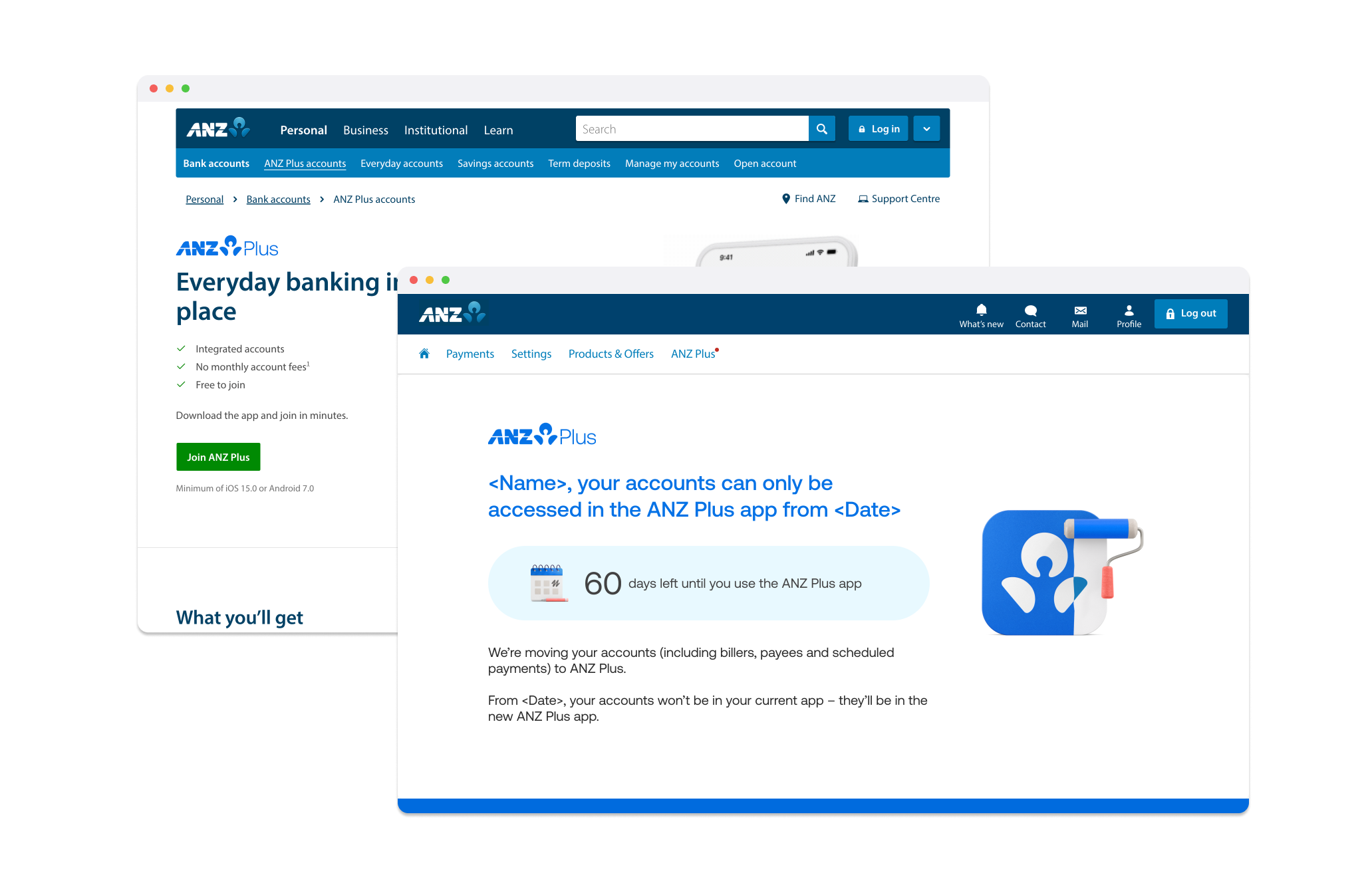
Blended - When separation wasn't possible, clearly label ANZ Plus content.
Minimise log in challenges for 160,000 customers
To migrate, customers need their registered mobile number and Internet Banking credentials. Both proved to be friction points.
Up to 100k customers may have a different mobile number from what's on file. Quantitative research (n=148) with app-dominant customers showed up to 33% couldn't recall their password and 31% couldn't recall their user ID. The first wave of migrating customers are app-dominant. We estimated up to 60k would be impacted.
Without intervention, a significant portion would fail to authenticate and end up locked out.
Originally, in-app comms only included countdown and high-level migration information. I advocated for adding credential and mobile number guidance in authenticated pre-move communications, reaching customers while they could still act. I advised on technical feasibility and additional build required.
Ongoing risk and recommendations
The research flagged credential recall as an ongoing watch point. Even with a well-designed journey, customers would need support post-move day. This shaped recommendations for additional work (such as app-to-app authentication, which enables customers to authenticate during ANZ Plus app registration via their ANZ App.) and contact centre readiness planning.
Outcomes - Phase 1
Brand transition strategy became the reference for all migration communications across teams
70+ artefact design repository as the single source of truth for comms and digital delivery
Design tested, built and ready to ship, Phase 1 execution-ready before the pivot to Phase 2
PHASE 2Suncorp Bank to ANZ
Role: Service Design Lead
Team: Co-lead with two Service Design Leads
Collaborators: Cross-functional peers and designers from Personalisation, App and web banking, Identity, Accessibility
For phase 2, my role shifted to Service Design to lead the end to end customer journey for 900,000 Suncorp Bank customers with different expectations, products, and mental models.
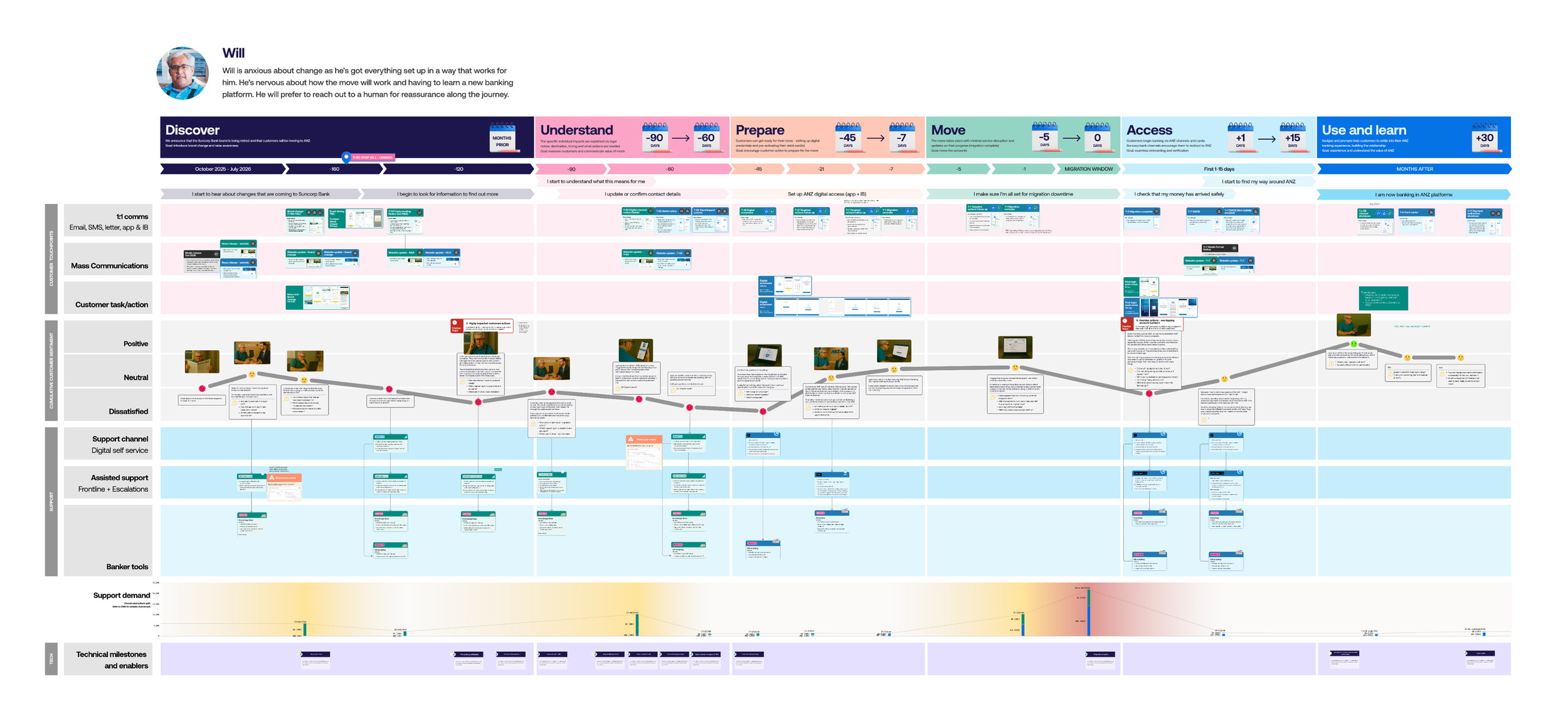
Aligning 20+ teams with Service Blueprints
We learned that there were some existing personas and high level journey timelines. As we connected with different teams, we consistently heard that teams wanted to see the “end-to-end customer journey”.
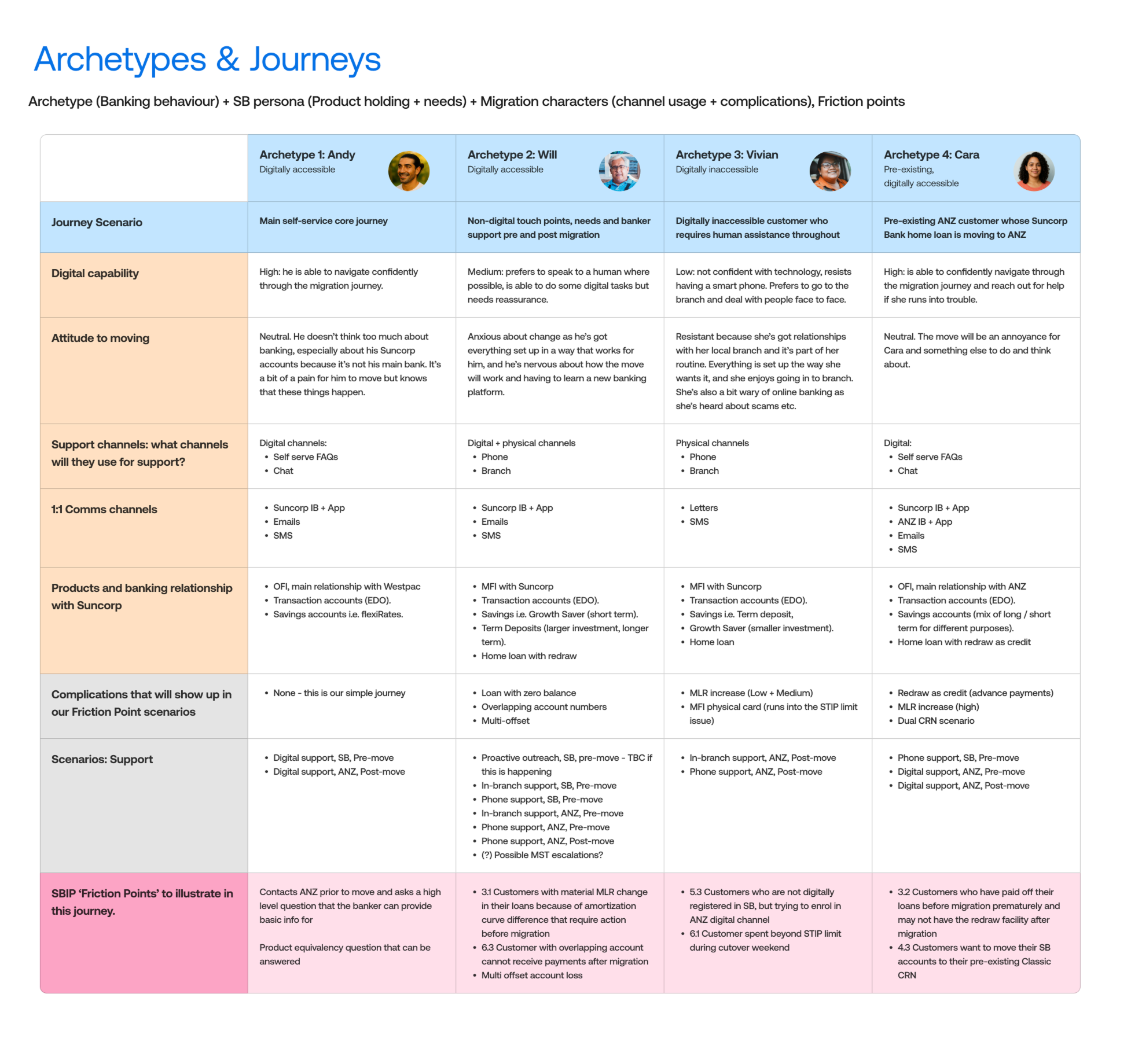
There were a total of 12 archetypes from different teams. My first step was to first consolidate the archetypes, creating consistency across teams, and reducing the blueprint work required.
To reduce to number of archetypes, I used a layering approach.
Archetypes (Banking behaviour) + Suncorp Bank personas (Product holding + needs) +
Migration Characters (channel usage)
Behaviour was the foundation of the final archetypes, it drives how customer will react and interact with the banks after receiving migration comms. In the blueprints, this surfaced the sequencing needed between comms, banker, and system teams.
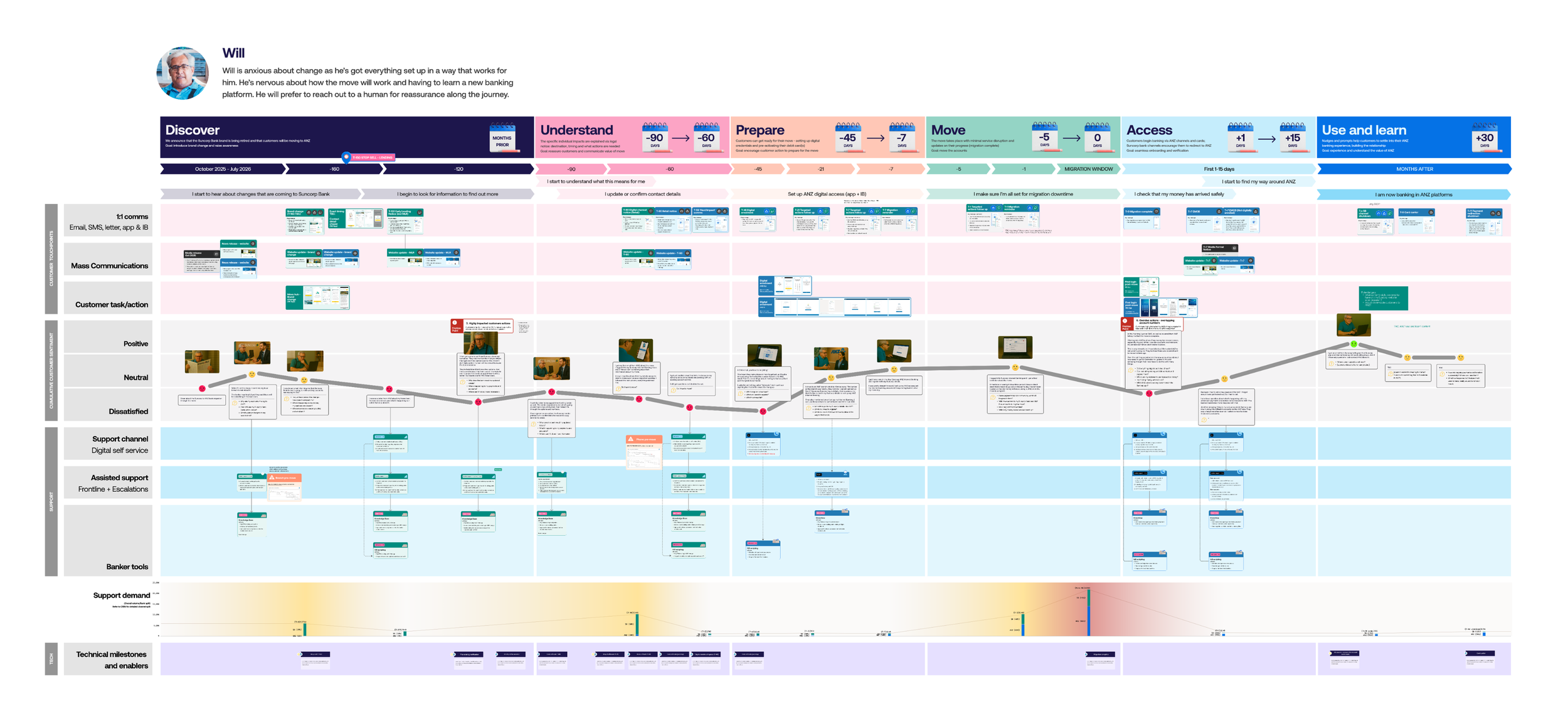
Service Blueprints
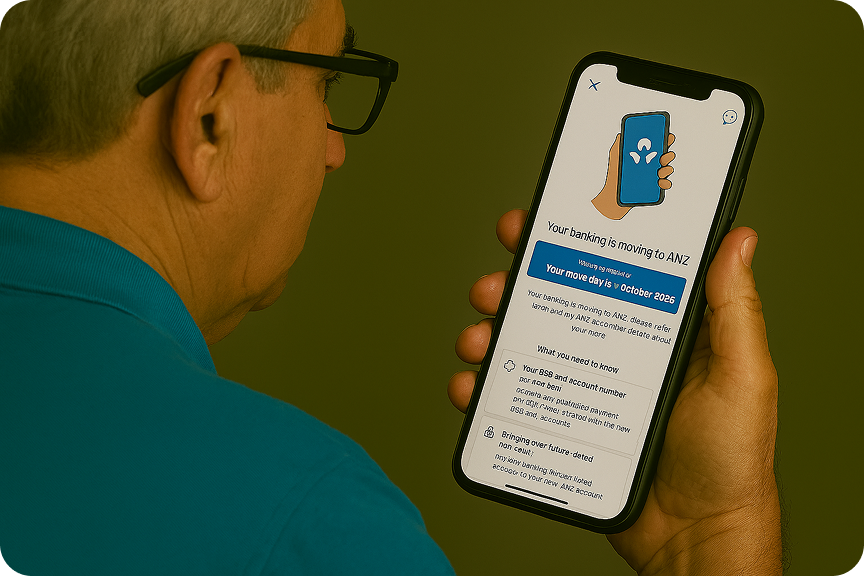
Once I reviewed the archetypes and each customer journey with teams across both banks. I built the service blueprints using AI-generated photos for each archetype, making the customer experience, challenges, and sentiment feel real.
The blueprints gave teams a full view of the journey and served as the key artefact for aligning who needs to do what at each touchpoint.
The work is in progress and the service blueprints continue to be used by teams as a reference to discuss journey decisions.
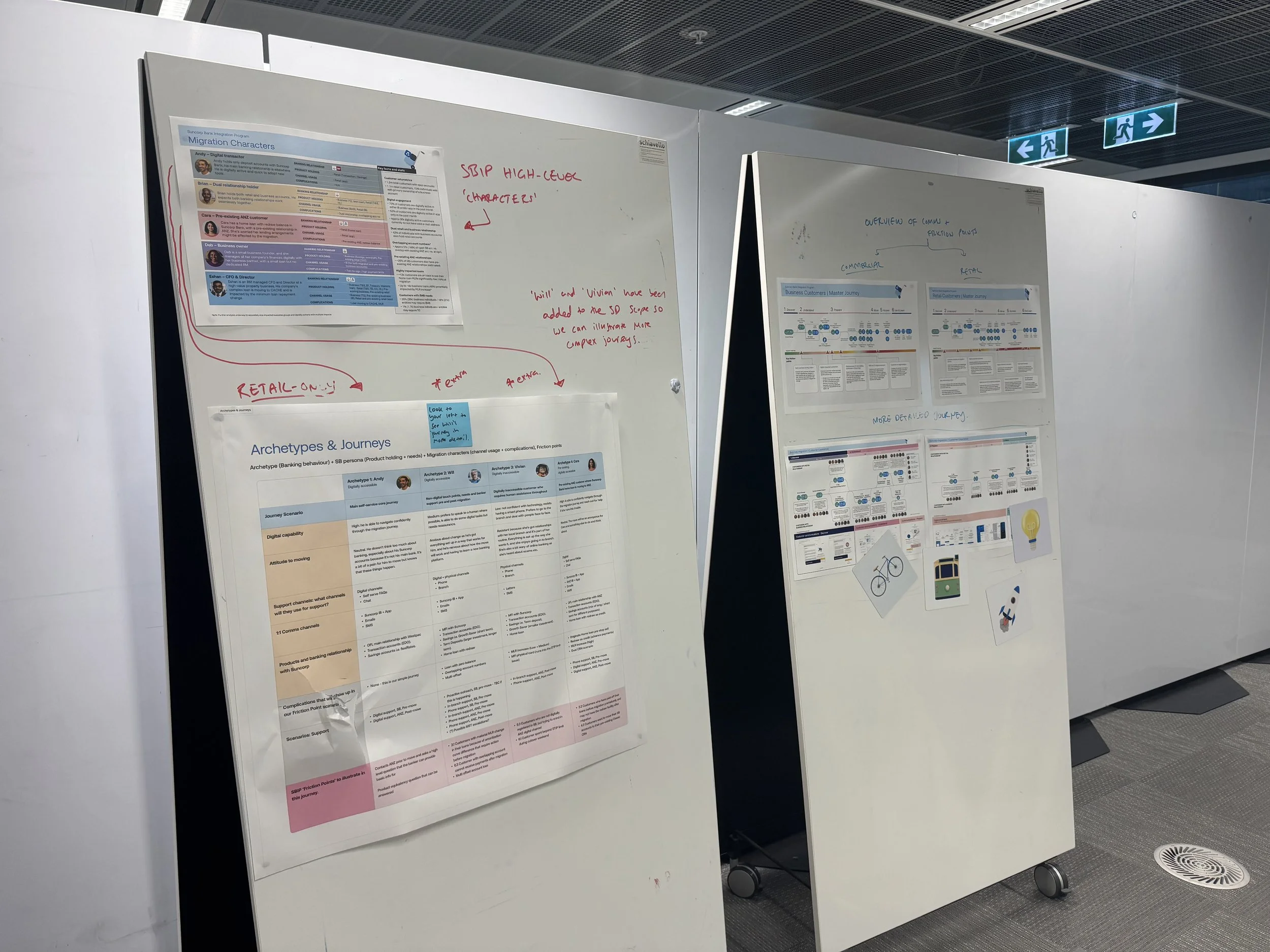

Alignment on customer archetypes
From 12 archetypes down to 4, agreed upon across both Suncorp Banks and ANZ on customer types.
Outcomes - Phase 2
Service Blueprints with clarity
Teams now have better understanding of end to end customer journey and cross-team responsibilities.